6 The Cloud Hypothesis: Cosmic Rays and Climate
Galactic cosmic rays seed low-cloud condensation nuclei via ion-induced aerosol nucleation; the Sun modulates this flux; this controls albedo and surface temperature.
6.1 How Cosmic Rays Reach the Lower Atmosphere
Before galactic cosmic rays can influence Earth’s climate, they must first navigate the vast expanse of the heliosphere, the region of space dominated by the Sun’s outflowing magnetized solar wind. [44] The solar wind is not merely a stream of plasma; it carries the Sun’s magnetic field, known as the interplanetary magnetic field, which permeates interplanetary space. [217] The strength of this shielding varies with solar activity, modulating the flux of incoming galactic cosmic radiation that reaches the inner solar system. [168] When the Sun’s magnetic field is strong, particularly during solar maximum, it effectively deflects these charged particles, preventing them from penetrating deeply into the planetary system. [218] Conversely, during periods of low solar activity, such as the Maunder Minimum, the weakened magnetic field allows greater penetration of galactic cosmic rays. [14] This modulation mechanism suggests that the interplanetary magnetic field carried by the solar wind shields the heliosphere from galactic cosmic radiation. The variability in this shielding is crucial because it determines the intensity of cosmic rays that eventually collide with Earth’s atmosphere. [219][218][220][122][221][64] It is within these denser layers that atmospheric ionization occurs, creating the conditions necessary for potential cloud-seeding effects. [222]
The flux of galactic cosmic radiation reaching Earth is modulated by solar variability, a relationship that suggests the Sun’s control over this incoming particle stream on solar cycle timescales. This modulation arises because the solar wind, carrying the solar magnetic field, shields the inner solar system from high-energy galactic particles. [223][102][224][103][218][225] During periods of high solar activity, this shielding intensifies, reducing the cosmic ray flux that penetrates to Earth. [130] Conversely, during solar minima, the weakened heliospheric magnetic field allows a greater influx of these particles. [226] These high-energy charged particles, primarily protons and alpha particles originating from supernovae, collide with air molecules to produce a variety of secondary particles, including X-rays, gamma rays, neutrons, and heavy ions. [227] While the atmosphere largely protects the surface from destructive radiation, the secondary cascade remains critical for understanding how cosmic rays influence lower atmospheric chemistry and cloud formation mechanisms. [218]
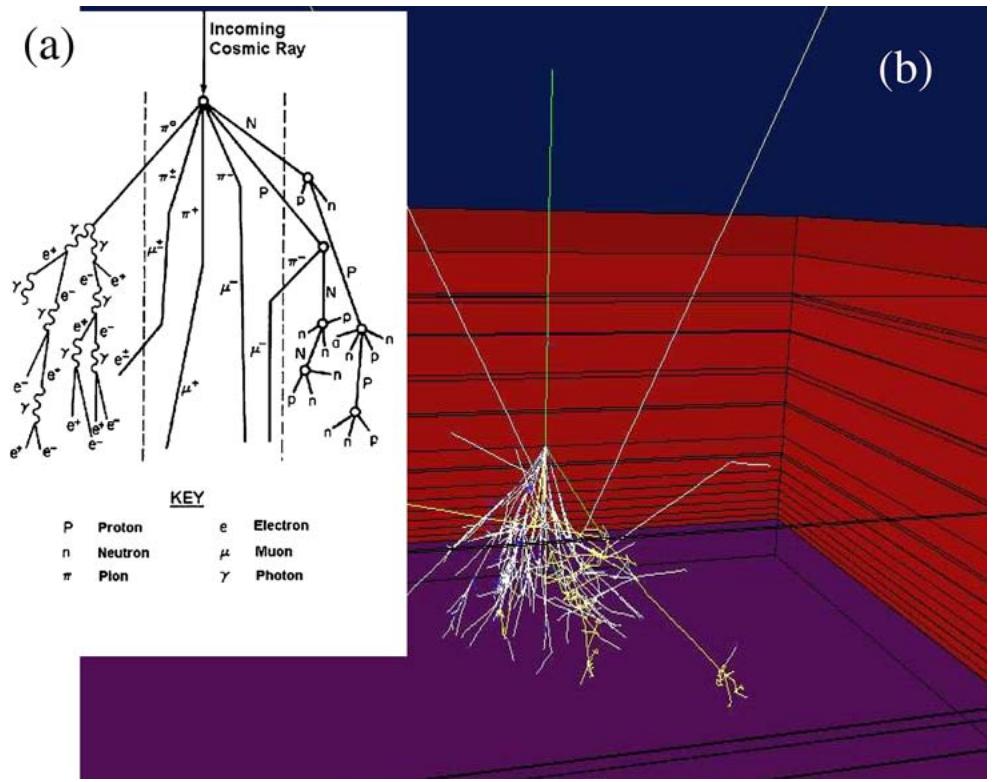
When energetic cosmic rays strike the Earth’s atmosphere, they initiate a complicated nucleonic-muon-electromagnetic cascade that ionizes the ambient air across various altitudes. [223][111] Modeling of cosmogenic isotope production, such as \({}^{7}Be\), reveals that the most effective energy for particle interaction shifts from approximately 1 GeV/nucleon in the stratosphere to about 3 GeV/nucleon in the lower troposphere as altitude decreases. [228] This process releases secondary particles, including protons, neutrons, and muons, which penetrate deeper into the atmospheric layers. [111] The cascading effect continues until particle energy falls too low for further collisions, generally ending around 16 kilometers above the surface in the lower atmosphere. [218] Within this region, below 16 km, muons and electrons from high-energy collisions are the primary contributors to charged particle intensity. The ions produced within the troposphere by these cosmic rays serve as an important element of aerosol production. [229][223][218][219][230] Specifically, ionization contributes to the gas-particle formation of ultra-fine aerosols, smaller than 20 nanometers, which build into cloud condensation nuclei. [231] Consequently, water vapor condenses into larger water droplets that form clouds, linking the initial cosmic-ray impact to the final cloud structure. These ions are critical because they serve as likely candidates responsible for observed correlations between cosmic ray intensities and cloud or aerosol parameters. [232] Consequently, ion chambers at the top of the atmosphere show a very much larger modulation with the solar cycle than instruments at sea-level, with a change in ionization at 10 mb bound to be approximately a 50 per cent reduction between sunspot minimum and sunspot maximum. In controlled chamber experiments simulating conditions found in the lower troposphere over oceans, researchers observed that the production of new aerosol particles is proportional to the negative ion density. [233] These experiments utilized a mercury discharge lamp to initiate photochemical reactions, producing sulfuric acid through the photolysis of ozone and subsequent reactions with sulfur dioxide, oxygen, and water. [233] Ionization was achieved through cosmic radiation, natural radon decay, and a 35 MBq Cs-137 gamma source, allowing for precise measurement of ion pair production rates ranging from approximately 3.7 to 35 cm⁻³ s⁻¹. [234] These findings suggest that ions are active in continuously generating a reservoir of small thermodynamically stable clusters that can rapidly grow in the presence of condensable vapors. [233] This ion-mediated chemistry provides a plausible explanation for nucleation events that cannot be accounted for by classical nucleation theory alone. [233] Further field studies are therefore needed to quantify the relative importance of ion-induced nucleation in the global aerosol budget. [235]
6.2 Forbush Decreases the Natural Experiment
To understand this mechanism, we must look to the young solar twin \(\kappa^{1}\) Ceti, a star that provides a crucial case study for how solar activity affected the climate during the early history of the Earth. [224] When these ejections are directed toward the Earth, they trigger sudden and significant reductions in the influx of galactic cosmic rays over time scales ranging from hours to days, a phenomenon known as Forbush decreases. These temporary dips in cosmic ray flux are not merely theoretical curiosities; they serve as natural experiments that allow scientists to observe the immediate atmospheric response to changes in ionization. [224][225][231][213][64] While such large Forbush decreases are too rare in the modern era to have a significant ongoing effect on the Earth’s climate, their impact may have been far more profound in the distant past. [224] Four billion years ago, when life started to evolve on the Earth, coronal mass ejections were expected to be much more common on the early Sun, suggesting that the reduction in galactic cosmic ray influx originating from Forbush decreases could have been significant compared to the reduction from the Sun’s more effective shielding at that time. [224] By using the flare rate of \(\kappa^{1}\) Ceti to estimate the coronal mass ejection rate, scientists can gauge how common these events would have been on an Earth-like planet around such a young star, offering a window into the climatic conditions that shaped the origins of life. [224]
Forbush decreases, sudden drops in cosmic ray flux caused by coronal mass ejections, serve as natural experiments to test hypotheses about solar influences on Earth’s weather and clouds. These events are ideal for isolating the link between cosmic rays and clouds because they produce a sharp, transient signal lasting for a week or two. [103][64][225] Observations using three independent cloud satellite datasets and one aerosol dataset reveal a clear response in clouds and aerosols to these decreases. [237] The data shows that reductions in the cosmic ray flux translate into changes in cloud properties, with the timing difference between the cosmic ray minimum and the cloud response reflecting the time it takes for aerosols to grow into cloud condensation nuclei. [237]
Solar coronal mass ejections generate plasma clouds that sweep past Earth, triggering sudden, week-long drops in galactic cosmic ray flux known as Forbush decreases. [231] These rare events provide a natural experiment to test the causal chain from solar activity to cloud formation. [237] Analyses of the five strongest Forbush decreases between 1990 and 2005, utilizing three independent cloud satellite datasets and one aerosol dataset, demonstrate clear signals of changes in low cloud liquid water content. The data reveal a distinct delay of five to seven days between the minimum in cosmic rays and the subsequent response in clouds and radiative forcing. [238][64][224][231][103] The observed reduction in cloud properties, particularly in low liquid clouds over the oceans, confirms that the entire chain—from cosmic rays to aerosols to clouds—is active in the Earth’s atmosphere. [238] By isolating these strong events, researchers maximized the signal-to-noise ratio, establishing a statistically significant linear relationship between the strength of the Forbush decreases and the globally averaged shortwave radiation response. [238]
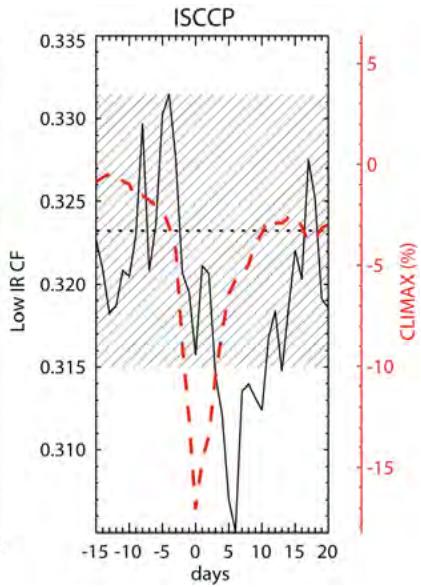
When coronal mass ejections directed toward Earth cause sudden, week-long drops in galactic cosmic ray influx known as Forbush decreases, they provide a natural experiment to test atmospheric responses. [231] Specifically, these observations demonstrate that Forbush decreases are associated with changes in the relative abundance of fine atmospheric aerosols, establishing a link from solar activity through cosmic rays to aerosols and finally to clouds. The delay between the cosmic ray minimum and the cloud parameter minimum reflects the time required for aerosols to grow into cloud condensation nuclei. [239][64][224][231][103][213] During these influential recent events, liquid water in the oceanic atmosphere decreased by as much as seven percent, confirming that the whole chain of effects is active in the real atmosphere. [237] This discernible response supports the hypothesis that cosmic ray ionization controls the number of cloud condensation nuclei, thereby affecting Earth’s climate. [231] Statistical analyses of these events reveal distinct atmospheric signatures, particularly in polar regions. [238] Studies by Pudovkin and Veretenenko reported a reduction of mean cloud cover following Forbush decreases at high latitudes greater than 60°N, while Roldugin and Tinsley found associated changes in atmospheric transparency at latitudes exceeding 55°N. These observations suggest that the sudden drop in ionizing radiation is associated with measurable alterations in cloud properties and optical depth. [240][225][64][103][213][224] While early studies by Pudovkin and Veretenenko reported cloud cover reductions at high latitudes, subsequent research by Kniveton and Tinsley, as well as Todd and Kniveton, identified zonal mean total cloud anomalies associated with Forbush decreases, particularly in polar and equatorial regions. These findings suggest that the primary effect of cosmic rays may relate to vorticity and cyclogenesis, especially during cold seasons in high-latitude areas. [213][225][224][103][64]
The natural experiment provided by Forbush decreases offers a critical test of the cosmic ray–cloud hypothesis, isolating the mechanism from long-term solar trends. [231] These events, triggered by coronal mass ejections that send plasma clouds past Earth, cause sudden, short-term drops in cosmic ray flux lasting a week or two. [231] The data revealed a clear, reproducible response in both clouds and aerosols, with the timing of the minima offset by the time required for aerosols to grow into cloud condensation nuclei. [231] This latitudinal gradient aligns with theoretical expectations for cosmic ray penetration. [103] Crucially, the magnitude of the observed cloud and aerosol responses suggests that the cosmic ray–cloud link could explain approximately 1 W/m² of solar cycle forcing. This estimate is consistent with crude calculations indicating that a 3% variation in cloud cover during an average 11-year solar cycle corresponds to a radiative forcing of 0.8 to 1.7 W/m². [103] Consequently, while the physical link appears robust, its global climatic significance requires further quantification.
6.3 Chamber Evidence Sky and Cloud
To move beyond statistical correlations and establish a physical basis for the cosmic-ray cloud hypothesis, researchers have turned to controlled laboratory environments that replicate the complex chemistry of the lower atmosphere. [241] The pivotal SKY experiment, conducted at the Danish National Space Center in Copenhagen, was designed to isolate the specific role of ionization in aerosol formation by using natural cosmic rays and gamma rays to simulate atmospheric ionization under conditions representative of Earth’s atmosphere over the oceans. This experimental setup allowed scientists to introduce trace amounts of ozone, sulfur dioxide, and water vapor into an eight-cubic-meter reaction chamber, where ultraviolet light initiated photochemical reactions to produce sulfuric acid, a key precursor for cloud condensation nuclei. [52][242] By varying the ionization levels using cesium-137 gamma sources, the researchers could directly observe the response of aerosol concentrations to changes in ion density. [242]
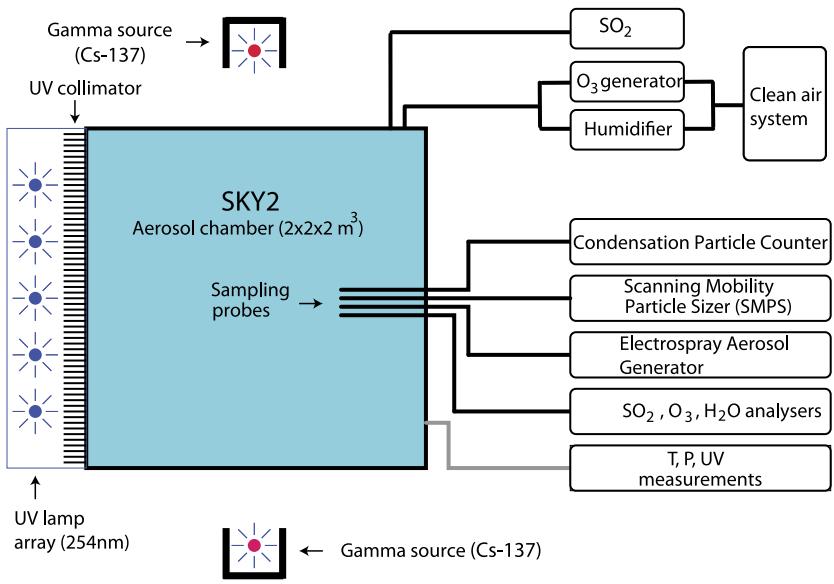
Controlled chamber experiments provide the critical link between ionization and aerosol growth, moving beyond theoretical speculation to observable physical mechanisms. [231] The SKY experiment at the Danish National Space Institute established that electrons released by cosmic rays act as catalysts, accelerating the formation of stable sulphuric acid and water clusters. In these tests, researchers observed that without ionization, molecular clusters failed to grow sufficiently to provide significant numbers of cloud condensation nuclei larger than 50 nm in diameter. [235][242][64][52] However, when the air in the chamber was exposed to ionizing radiation to simulate the effect of cosmic rays, the clusters grew much more quickly to the sizes at which they help water droplets form and make clouds. This result contradicts earlier numerical modelling results, indicating that an important part of the ion-mechanism was missing from the theory. [242] The solution involves a so-far-ignored contribution to growth from the mass of the ions themselves. [231]
To isolate the microphysical mechanism linking cosmic rays to cloud formation, researchers moved from observational correlations to controlled laboratory settings. [241] This experimental design allows for the isolation of ionization effects from other atmospheric variables. [231] The results from these chambers demonstrate that ion-induced nucleation occurs under near-tropospheric conditions, confirming that ions facilitate the initial formation of small aerosols from trace gases like sulfuric acid. [235] By increasing ionization, the number density of nucleated aerosols increases, providing a direct physical link between cosmic ray flux and aerosol production. [231] This confirms the viability of the ion-aerosol clear-air mechanism, showing that cosmic rays can indeed seed the particles necessary for cloud droplet formation, thereby validating the core premise of the Svensmark hypothesis in a controlled environment. However, the magnitude of this effect in the real atmosphere remains uncertain, as laboratory conditions may not fully capture the complexity of natural aerosol processing. [103][64] Consequently, while the mechanism is physically plausible, its climatic significance is still debated.
To bridge the gap between cosmic-ray ionization and cloud formation, researchers turned to controlled laboratory settings. [241] While these experiments establish the initial nucleation step, the path to cloud condensation nuclei (CCN) remains complex. [242] However, state-of-the-art aerosol simulations suggested otherwise, indicating that additional aerosols create competition for available gases. This competition results in slower growth and a higher probability that a small aerosol becomes incorporated into a larger one before reaching CCN size, challenging the direct link between nucleation and cloud droplet formation. [242] In controlled settings where ultraviolet light generates aerosols from trace amounts of ozone, sulfur dioxide, and water vapor, researchers observed that ionization by gamma sources consistently increased aerosol production. [242] This relative increase remained constant from the initial nucleation stage through to diameters larger than 50 nm, a size range appropriate for cloud condensation nuclei. [242] This unpredicted experimental outcome points to a process not included in current theoretical models, possibly involving an ion-induced formation of sulfuric acid in small clusters. [242] By demonstrating that ions facilitate the growth of particles into the cloud-condensing size regime, the SKY data supports the mechanism by which galactic cosmic rays could modulate cloud cover and, consequently, global surface temperature. [241] These models suggested that additional aerosols create competition for available gases, slowing growth and increasing the likelihood that small particles are incorporated into larger ones before reaching CCN size. [242] These controlled experiments show that ions can seed the formation of aerosol particles, which are essential precursors for cloud condensation nuclei. [231] However, the path from these initial nucleation events to the formation of observable cloud droplets remains an area of active research, with open questions regarding the efficiency of this process in the real atmosphere. The consistency across different cloud records suggests that the correlation is not merely an artifact of data persistence, but the precise causal link remains contested. [103] Consequently, while the chamber experiments confirm the microphysical possibility of ion-induced nucleation, the translation of this effect into a dominant climate forcing mechanism is not yet settled. The debate centers on whether the observed correlations in satellite records are robust enough to support the hypothesis that galactic cosmic rays play a significant role in modulating global cloud cover and, by extension, surface temperature. [103]
6.4 Heliospheric Modulation and Global Temperature
The relationship between solar activity and global surface temperature is not merely a matter of direct irradiance but involves complex modulation mechanisms that amplify the Sun’s influence on Earth’s climate system. [243] While Total Solar Irradiance (TSI) varies only slightly over the solar cycle, its impact on surface temperatures appears to be significantly enhanced by other factors, particularly those linked to cosmic rays and cloud formation. [64] The evidence thus points to a more nuanced understanding of solar-climate interactions, where the Sun’s magnetic activity and its effect on cosmic rays are key drivers of surface temperature variability. [103] In these records, solar changes lead temperature anomalies, a pattern consistent with both climate modeling and other climate and solar variability studies. [1] The climatic effect of the de Vries solar cycle is thus well established across multiple paleoclimate archives, including Central Asian ice-cores, Asian and South American monsoon-record speleothems, Mesoamerican lake-sediment cores used as drought proxies, and Alpine glaciers. [1] These diverse datasets collectively support the existence of a significant delay between solar forcing and terrestrial thermal response. [1] A delay of approximately 11 years exists between changes in Total Solar Irradiance and corresponding changes in surface temperatures. This finding further implies that the observed lag may reflect complex atmospheric or oceanic feedback processes rather than a simple radiative response. [8] The basic evidence supports a picture where temporal correlations link expected spiral arm crossings, variable cosmic-ray flux observed in iron meteorites, and the appearance of ice ages. [213] These temporal correlations support a picture in which climate on Earth is affected by our changing location in the Milky Way, by way of a variable cosmic-ray flux, with the basic evidence supporting relations between expected spiral arm crossing, variable CRF observed in iron meteorites, and the appearance of ice ages on Earth. [213] The data confirms that Greenland’s interior ice sheet experienced a growth trend starting as far back as 1992, gaining mass by a net 11 billion tons per year plus or minus three billion tons per year, according to Dr. [49] H. Jay Zwally et al. in a 2005 article in the journal Glaciology. [49]
The mid-century cooling trend, specifically the global cooling from 1945 to 1977, occurred during a period of increasing post-1945 CO2 emissions. This divergence demonstrates that rising greenhouse gas concentrations were not the dominant driver of surface temperatures during this interval. [8] The coincidence of two warming periods in this oscillation with the Modern Solar Maximum suggests that natural forcing and internal variability made a significant contribution to observed warming. [1] Consequently, the natural contribution to observed warming should come at the expense of considerably reducing the anthropogenic contribution. Furthermore, there is very solid evidence that periods of low solar activity in the past, identified by a higher rate of cosmogenic isotopes production such as \(^{14}\mathrm{C}\) and \(^{10}\mathrm{Be}\), have a high degree of correlation with periods of climate deterioration manifested mainly as temperature decrease and precipitation changes. 2500-yr Bray cycle, with comparison of climate and solar variability records leading to the important observation that the period of the cycle correlates with the amplitude of the climate effect observed. [1] In general, the longer the cycle period, the more profound effect it appears to have on climate. [1]
6.5 Shaviv and the Spiral Arm Record
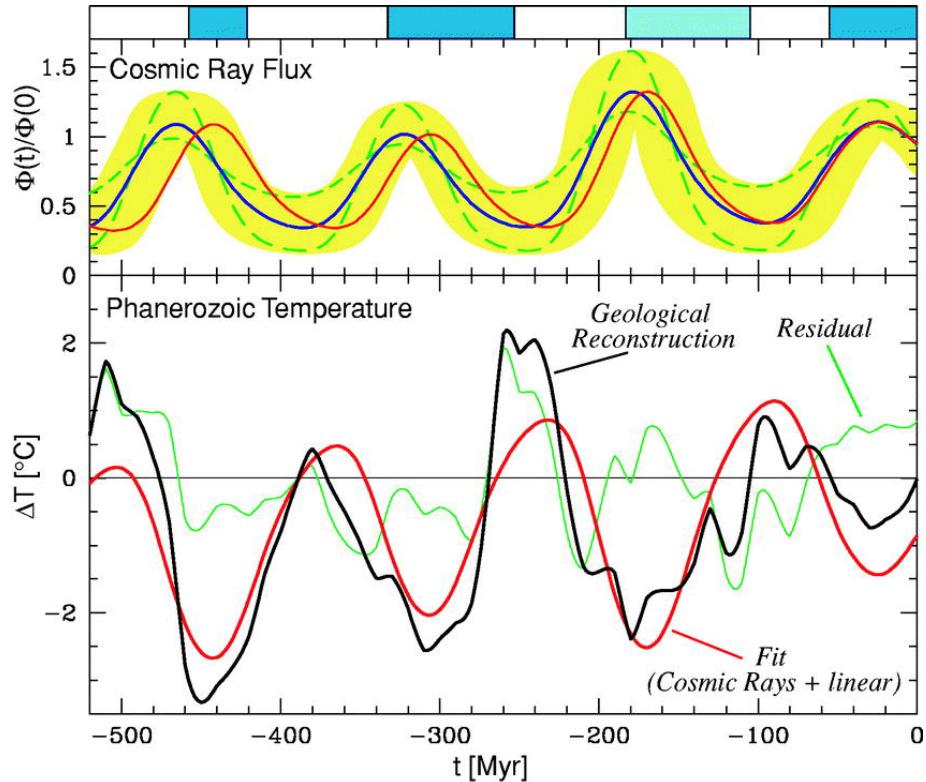
The long-term climate record of the Phanerozoic eon reveals a pattern of alternating cool and warm intervals rather than a unidirectional trend, a variability that spans the last 570 million years. [1] 150-Myr periodicity, a pattern first identified by G.E. [1]
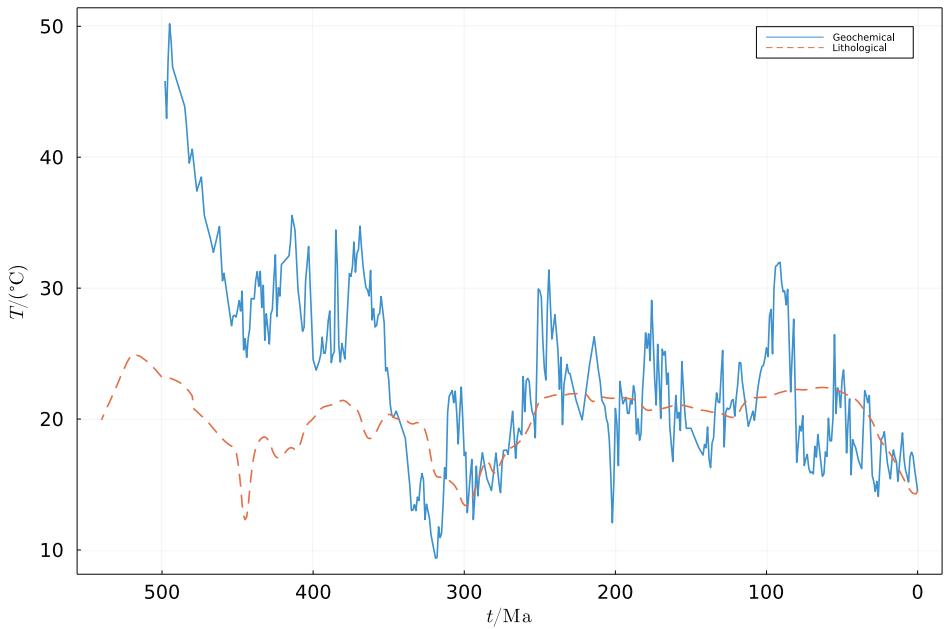
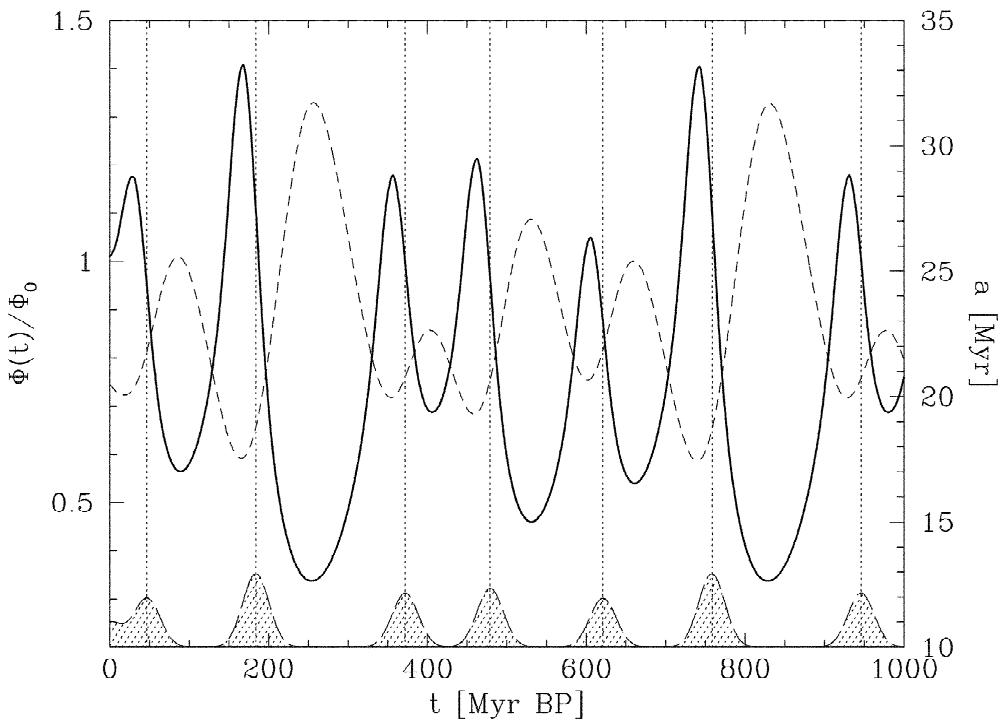
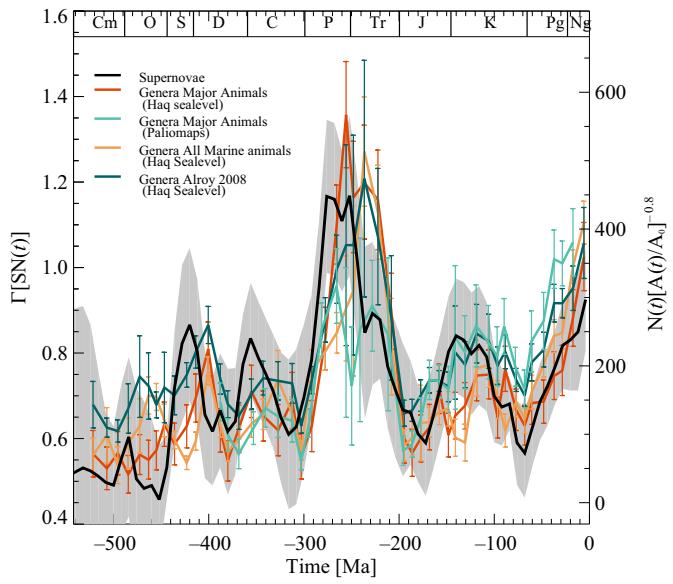
Reconstructions of local supernova rates over the past 500 Myr, derived from open cluster ages and trajectories, demonstrate that cosmic ray flux variations on million-year timescales are determined by the local galactic environment rather than solar activity. Monte Carlo simulations combining open cluster dynamics with stellar evolution reveal that nearby supernovae cause significant spikes in Galactic cosmic ray flux, inducing atmospheric ionization changes larger than those caused by solar activity. [225][213]
The alignment between galactic structure and Earth’s climate history suggests a deep connection between cosmic-ray flux and long-term glaciation. [213] This periodicity excludes random phenomena for glaciation appearance with high statistical significance, supporting the hypothesis that galactic environment drives Earth’s ice age epochs. [213]
The Phanerozoic temperature record displays a c. [1] 150-Myr periodicity, a pattern first reported by G.E. [1] However, the spiral-arm climate hypothesis remains controversial because the solar system’s past path, speed, and the position of the galactic arms in the distant past are not well constrained.
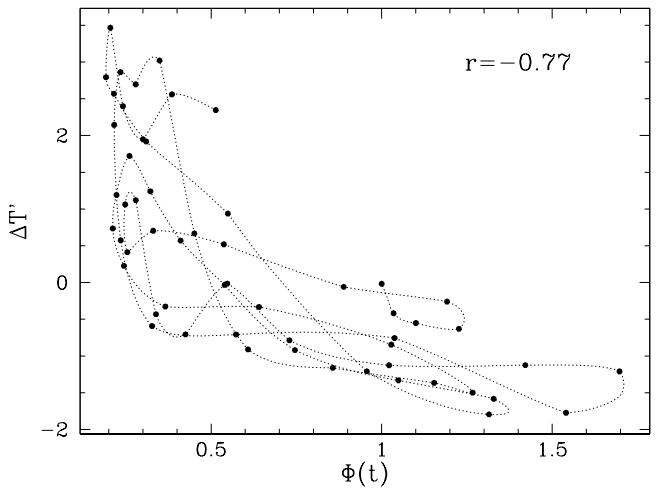
On geological timescales exceeding a million years, cosmic-ray variations are determined by the local galactic environment, with density expected to be higher when Earth resides within dense galactic spiral arms. [213] However, interpreting this correlation is not straightforward, as it assumes the constancy of other drivers and climate type throughout millions of years. During the Phanerozoic period, cold glacial periods coincided with high local supernova frequency and high cosmic rays, while warm climates appeared when the flux was low. [244] The CRF record exhibits a clear variability signal with a periodicity of 143±10 Myr, which is consistent in phase with the predicted CR diffusion model incorporating spiral arms. [245] The concentration of trace elements in pyrite serves as a proxy for nutrient availability in the oceans, correlating closely with cosmic ray changes throughout the Phanerozoic. [244] Since nutrients such as phosphorus are fundamental limiting factors for biological systems, the energy flow through biological systems is constrained by these cosmic-driven climatic shifts. [244] The results depicted in the relevant studies are consistent with the hypothesis that this chain of causality—supernovae to climate to nutrient flow to bioproductivity—holds true over millions of years. [244] Furthermore, the periodicity of ice age epochs aligns with a cosmic ray flux record showing a variability signal of approximately 143 ± 10 Myr, which agrees in phase with the predicted cosmic ray diffusion model incorporating the Milky Way’s spiral arms. This agreement provides a qualitative link pointing to cosmic rays as a driver of climatic variability. [246] Thus, the long-timescale climate sensitivity question is addressed by the persistent influence of galactic cosmic rays on Earth’s biosphere and climate, supporting the view that cosmic ray modulation is a primary factor in global temperature and productivity fluctuations.